
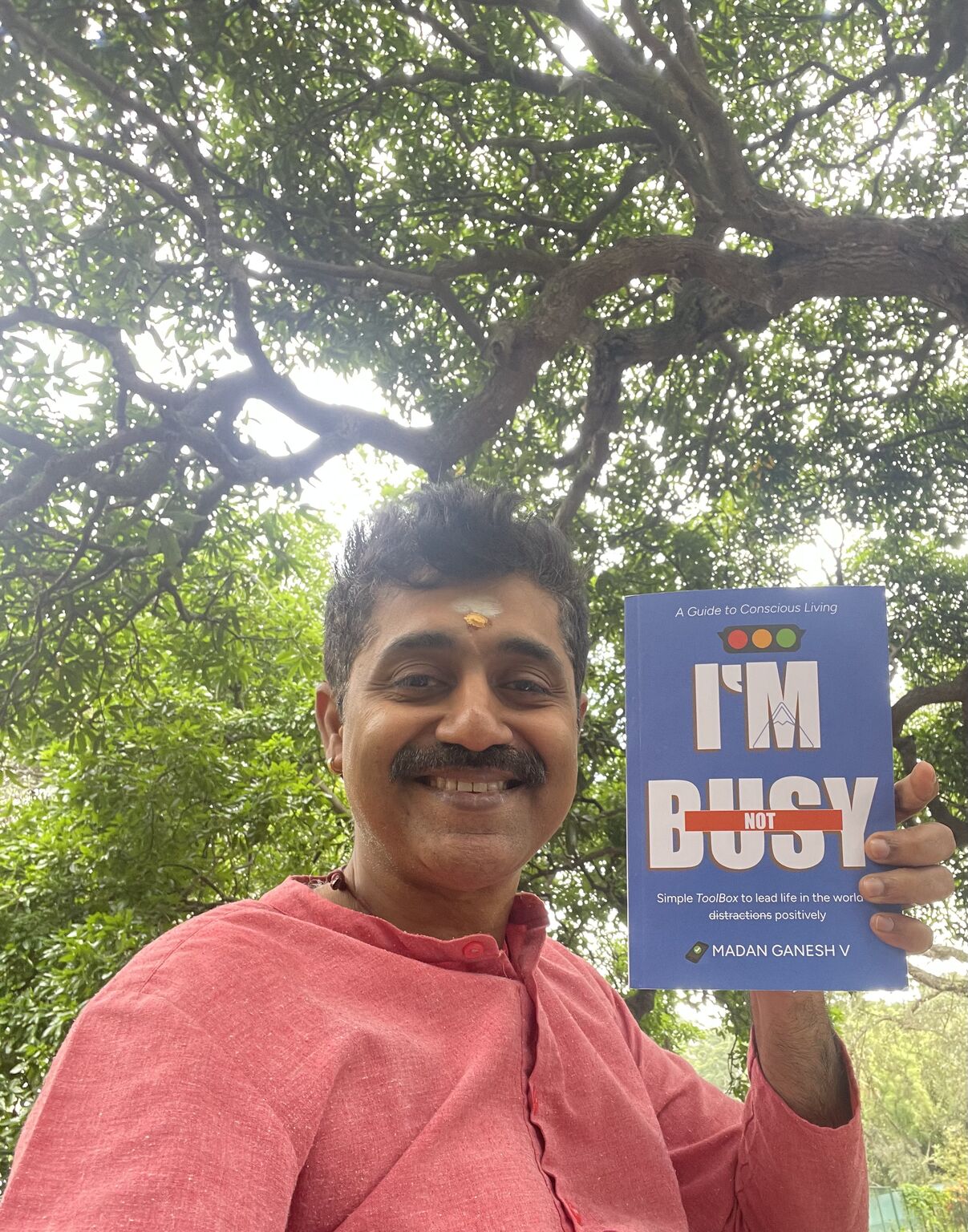
“To complete a marriage, build a house, and write a book.”
These were the words my grandfather often shared with me during my childhood. According to him, these three milestones completed a human life.
Years passed. I got married. I built a house.
But writing a book remained unfinished.
The Dream That Waited
Like many aspiring authors, I had attempted writing before. My first effort never really took shape. Life became busy. Work became demanding. Family responsibilities increased.
The dream quietly moved to the background.
Yet somewhere deep inside, the desire remained.
The turning point came when I stopped looking outward and started looking inward. Through reflection, personal experiences, and with the blessings of my Guru, something unexpected happened.
Almost out of the blue, my first book was born.
Its title was simple:
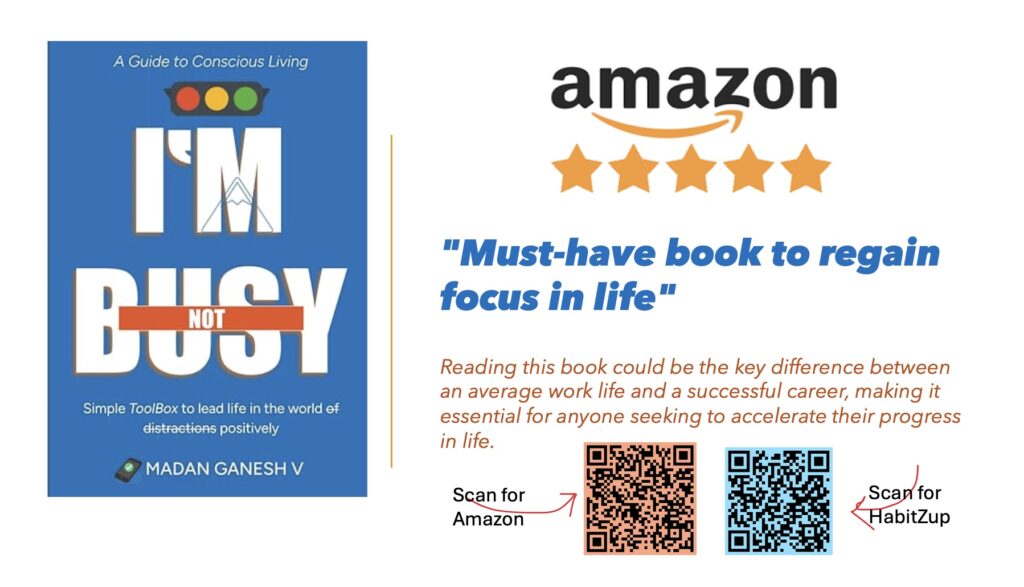
“I’m NOT Busy.”
Everything seemed to align at the right moment.
Choosing the Self-Publishing Path
When I started my publishing journey, getting a traditional publisher was not my primary goal.
I had learned from other authors that established publishers rarely prioritize first-time writers unless the author already has a large audience or proven sales potential.
One author who influenced my thinking was the writer of Mom’s Test. Through his self-publishing community, he strongly advocated for independent publishing.
The message was clear:
If you believe in your book, don’t wait for permission. Publish it yourself.
That advice changed my approach.
Understanding the Publishing Options
There are several paths available for aspiring authors today.
Option 1: Traditional Publishing
Pros:
- Brand recognition
- Distribution network
- Professional editing and marketing support
Cons:
- Difficult for first-time authors
- Long waiting periods
- Lower control
Option 2: Self-Publishing Platforms
I chose Notion Press.
The process was straightforward, though the support experience was relatively limited.
Like most self-publishing providers, they offer professional services at additional cost.
The author largely becomes the project manager.
Option 3: Amazon KDP
Amazon’s Kindle Direct Publishing (KDP) platform opened another opportunity.
KDP allowed me to publish globally and make the book available across multiple countries.
One limitation was that physical print support in India was not as convenient as local print-on-demand options.
Therefore, I decided to use both KDP and Notion Press.
Building the Book Myself
Being a bootstrapped founder teaches you one important lesson:
Every rupee saved is a rupee earned.
Instead of outsourcing everything, I decided to learn and do many things myself.
I designed the front and back cover using Adobe Illustrator.
I applied for and obtained an ISBN number.
I researched pricing models.
I studied royalty structures.
I learned the mechanics of publishing from scratch.
The process itself became a learning journey.
How ChatGPT Helped Me
One of my biggest assistants during the writing process was ChatGPT.
I used the free version extensively.
It helped me:
- Improve grammar and spelling
- Critique sections of my writing
- Think from the reader’s perspective
- Refine ideas and structure
Back in 2025, image generation capabilities were still evolving.
To stay within free usage limits, I carefully planned my work across multiple weeks.
By doing much of the work myself, I estimate I saved nearly ₹20,000 in professional service costs.
The Reality of Book Economics
Many aspiring authors assume publishing a book is expensive.
The truth is that understanding the economics is more important than the writing itself.
Notion Press Model
Approximate numbers:
- Setup fee: ₹4,000
- Print cost per book: ₹150
- Selling price: ₹400
After marketplace fees and revenue sharing, the author’s earnings worked out to roughly ₹75–₹100 per book.
To recover the initial ₹4,000 setup investment:
You need to sell approximately 40 books.
This was one of my first lessons in publishing economics.
Going Beyond Print-on-Demand
As demand grew, I explored alternatives.
Through my network, I connected with printers in Sivakasi.
Printing in bulk dramatically reduced the per-book cost compared to print-on-demand services.
I printed 1,000 copies.
This decision significantly improved the economics of each book sold.
Selling Through Amazon India
I also listed the book through Amazon India’s marketplace.
The economics looked approximately like this:
- Delivery and pickup charges: ~₹60
- Marketplace fees: ~₹40
Total Amazon cost per book:
₹100
The remaining amount, after deducting printing costs, became the actual profit.
Understanding these numbers helped me make informed decisions rather than relying on assumptions.
Lessons from Sapna Book House
I visited the head office of Sapna Book House hoping to place my books in their stores.
The discussion was eye-opening.
They explained that retail distribution becomes viable when a publisher has a larger catalog—typically dozens of titles rather than a single book.
While they could not onboard my book immediately, they were generous enough to share industry contacts and printing resources.
Sometimes the most valuable outcome of a meeting is not a sale but a lesson.
Creating My Own Distribution System
As the founder of HabitZup, I already had an e-commerce ecosystem in place.
I decided to integrate book sales directly into the HabitZup store.
Today the process is largely automated:
- Customer places order
- Razorpay collects payment
- Order is processed automatically
- Delhivery manages shipping
- Tracking is shared with customers
The only manual steps are:
- Printing labels
- Packing the books
- Handing them to the pickup partner
What once looked like a complex publishing operation now runs through a streamlined workflow.
Why I Wrote the Book
The economics are interesting. The publishing process is educational. The technology is exciting.
But none of these were the real reasons I wrote the book.
The purpose was much simpler.
To save a life. To save a relationship.
Many people carry invisible burdens for years.
- Stress.
- Confusion.
- Regret.
- Emotional weight.
The goal of I’m NOT Busy is to help readers understand themselves better, drop unnecessary baggage, and navigate life using the MAP (My Action Plan) framework.
If the book helps even one person make a better decision, improve a relationship, or find clarity during a difficult moment, the journey has already been worth it.
The Real Reward
Writing a book taught me something unexpected.
Publishing is not about printing pages. It is about converting experiences into service.
My grandfather said that writing a book completes a life.
Today, I understand what he meant.
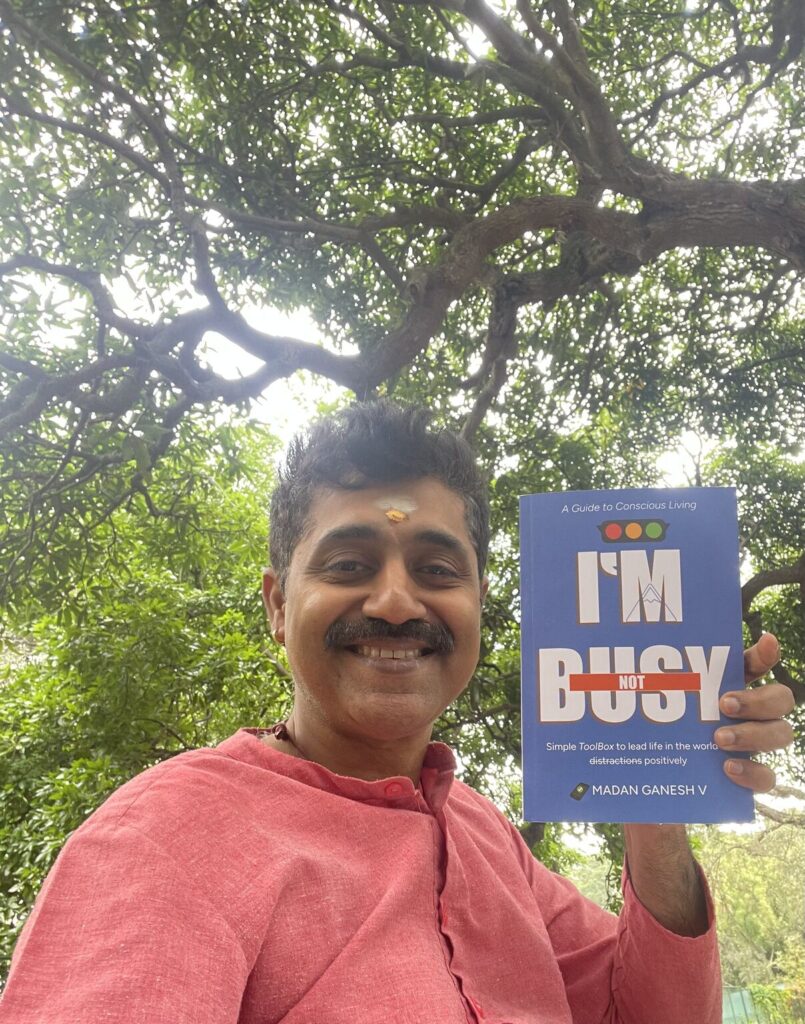
The book was never just a product. It was a contribution.
And perhaps, this is only the beginning of the journey.